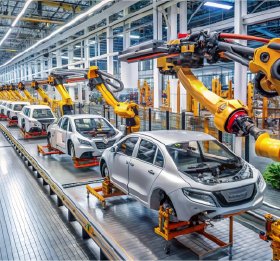
Automotive
High-strength metal parts for heavy-duty industrial use.
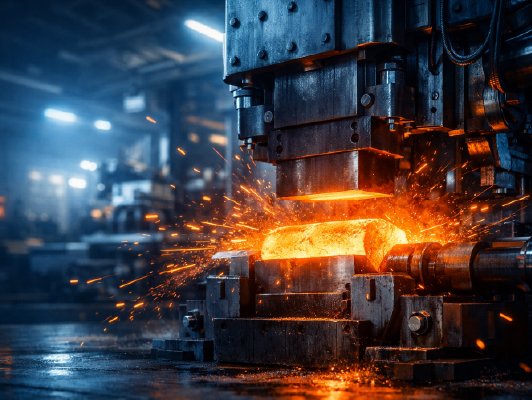
We provide industrial forging and forming for parts that need to survive high stress.Forging refines the internal grain of the metal. This makes the finished part much stronger. It helps the metal handle more pulling force (tensile strength) and stops it from cracking or wearing out (fatigue resistance) after years of heavy work.
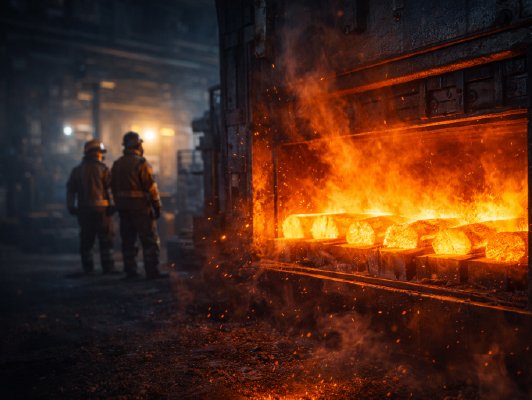
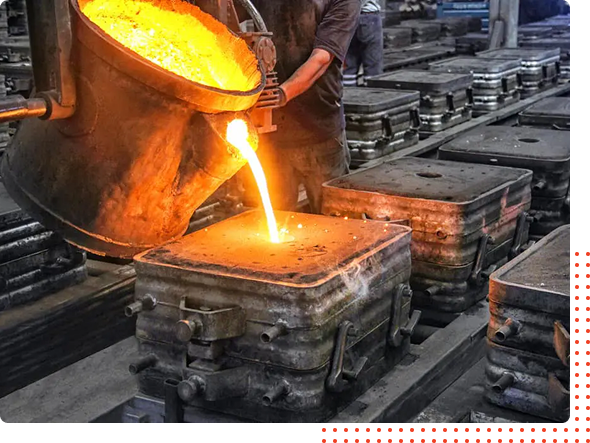
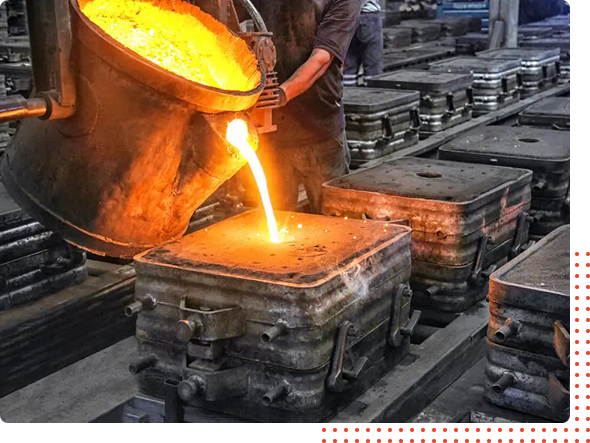
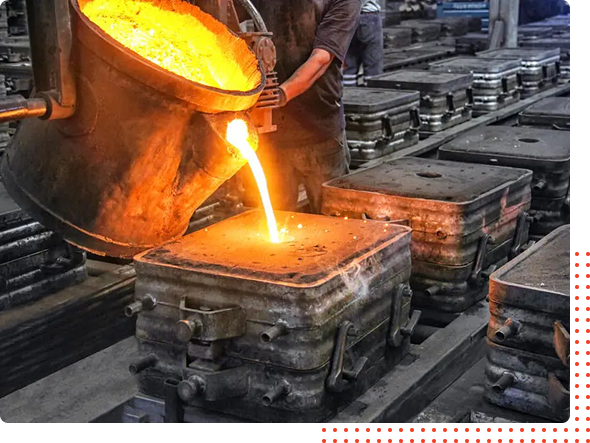
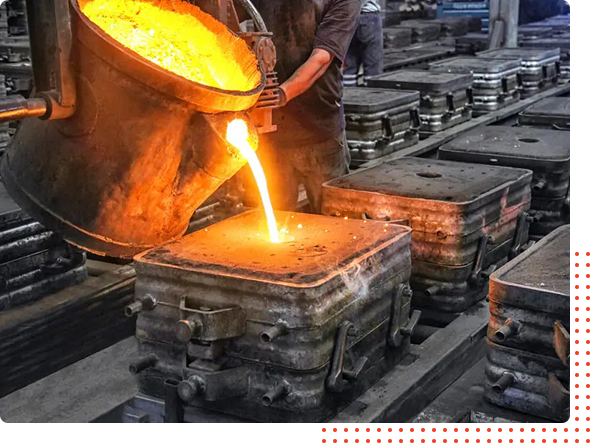
Forging shapes solid metal using high-pressure compressive forces. We heat a metal block (billet) until it is soft, then use a hammer or press to squeeze it into a specific shape. This "crushing" action aligns the internal grain of the metal to the part's shape, making it much stronger. The process includes:
Heating: Softening the metal in a furnace for easier shaping.
The Strike: Squeezing the metal into a custom mold (Closed Die) or hammering it between plates (Open Die).
Trimming: Cutting away the extra metal (flash) from the edges.
Heat Treatment: Heating and cooling the part to reach the exact hardness you need.
Final Check: Testing for hidden cracks to ensure the part can handle heavy-duty work.
Industrial Forging Workflow
1. Heating & Material Prep
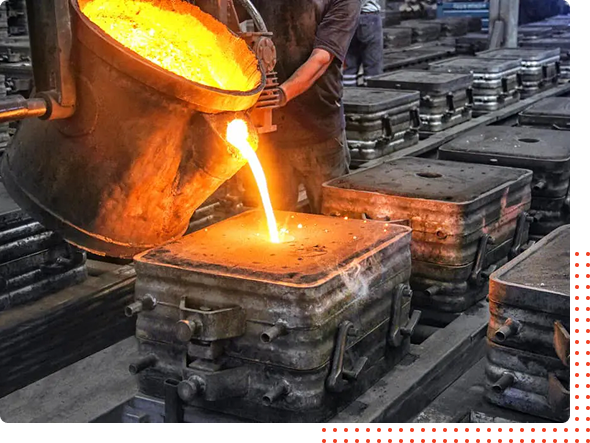
The raw billet enters the furnace to reach its plastic deformation temperature, making it ready for the line.
2. The Forging Operation
The heated metal moves to the press or hammer where compressive force aligns the grain flow to the part's geometry.
3. Deflashing & Trimming
The part is transferred to a secondary press to shear off the "flash" (excess metal) squeezed out during the strike.
4. Thermal Conditioning
The trimmed part enters a heat-treatment oven for quenching or tempering to lock in the required mechanical hardness.
5. Final Validation
The part moves to the testing station for ultrasonic or magnetic particle inspection to verify structural integrity before shipping.
We use different methods depending on the shape and strength you need:
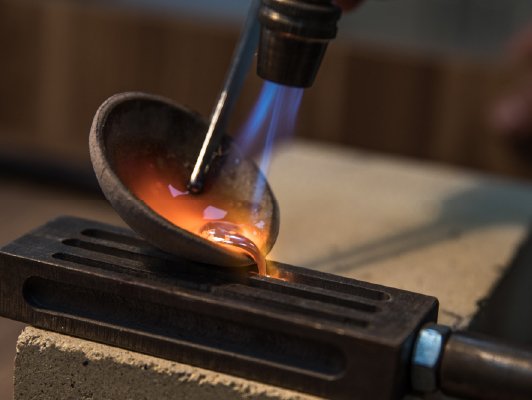
We work with high-performance metals to ensure your parts meet global safety standards:
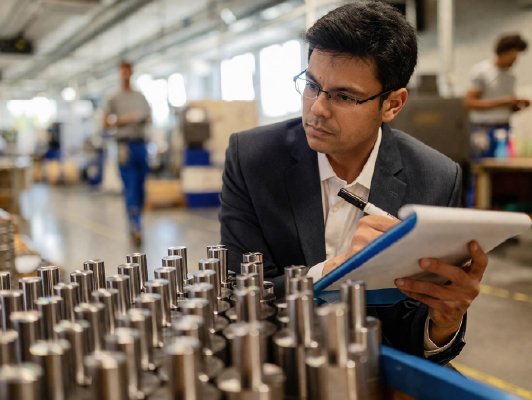
Every forged part we produce goes through a strict testing process:
Our cast components are used across multiple industries:
Automotive
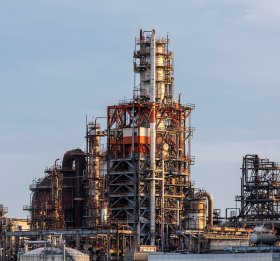
Oil & Gas
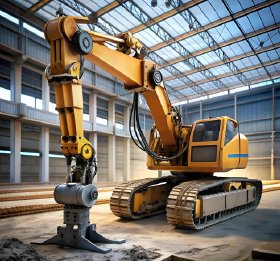
Construction Equipment

Railways
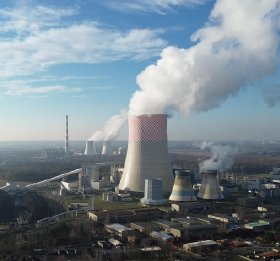
Power Plants
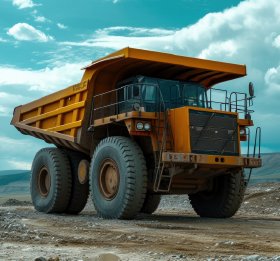
Heavy Machinery
Our cast components are used across multiple industries:
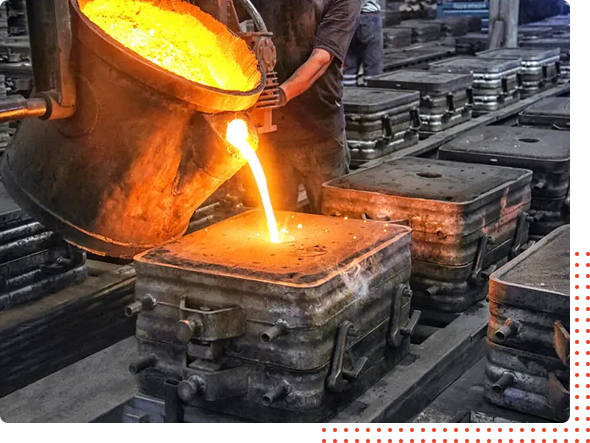
Crankshafts
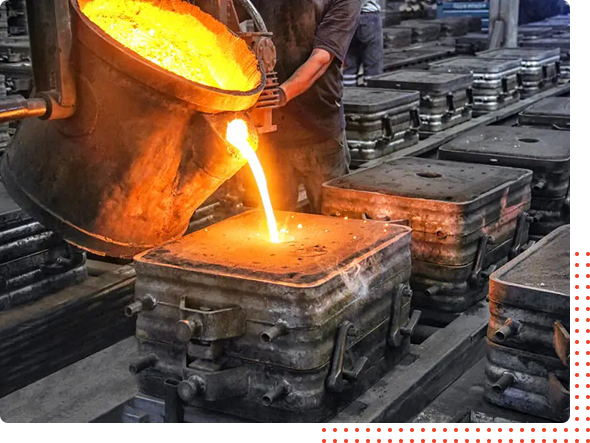
Connecting Rods
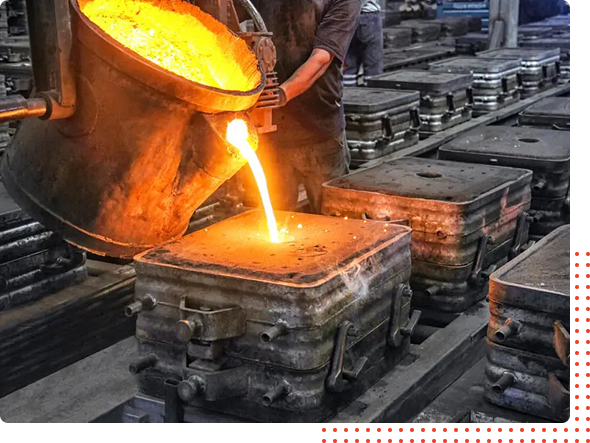
Axle Beams
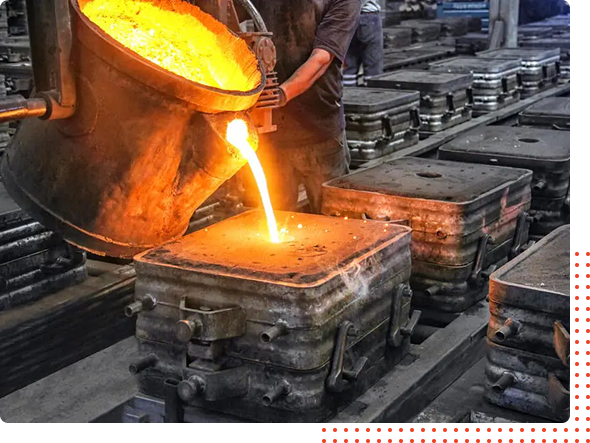
Steering Knuckles
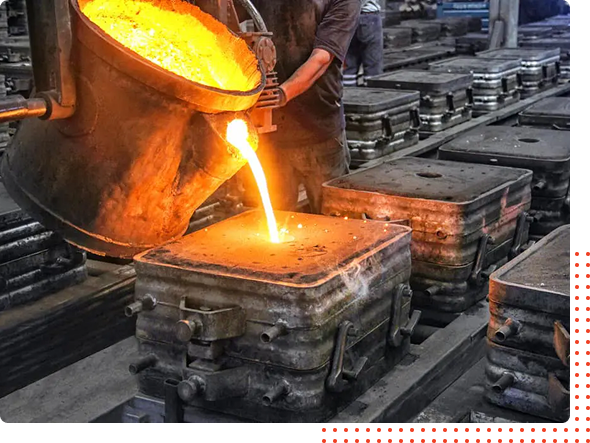
High-Pressure Flanges
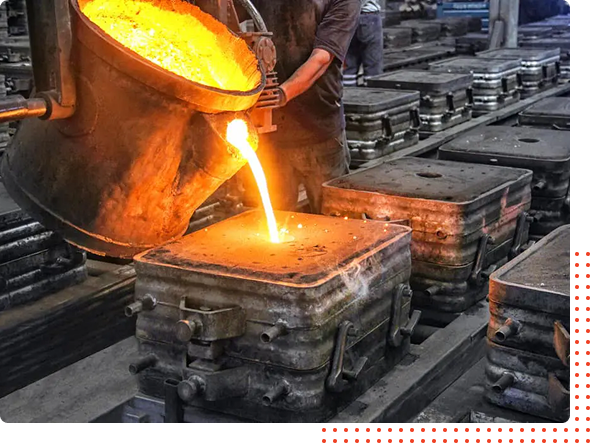
Valve Balls
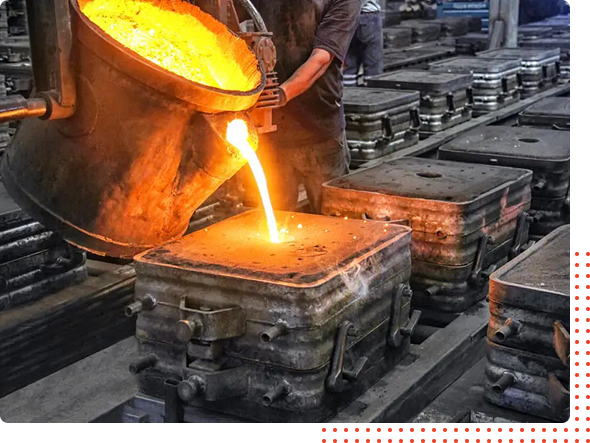
Wellhead Parts
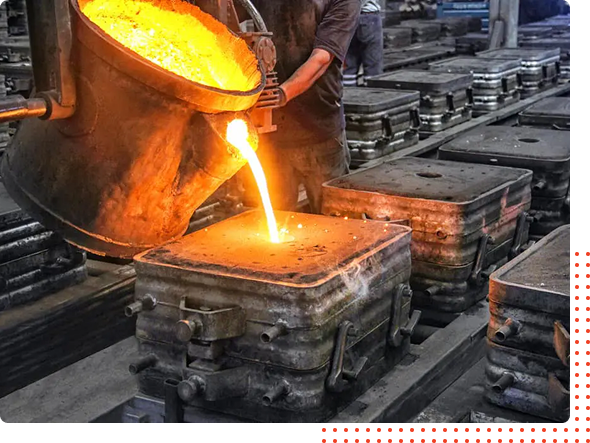
Hammer Unions
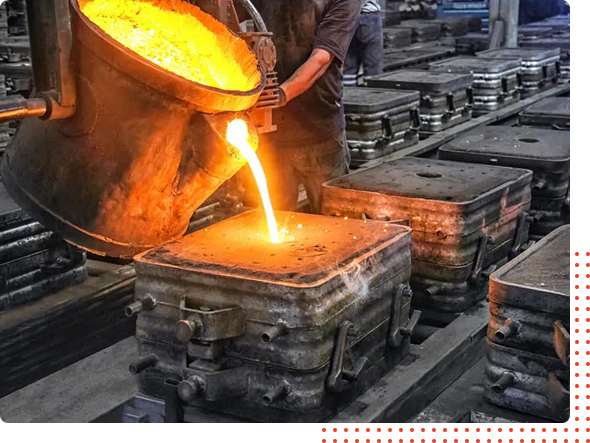
Heavy-Duty Gears
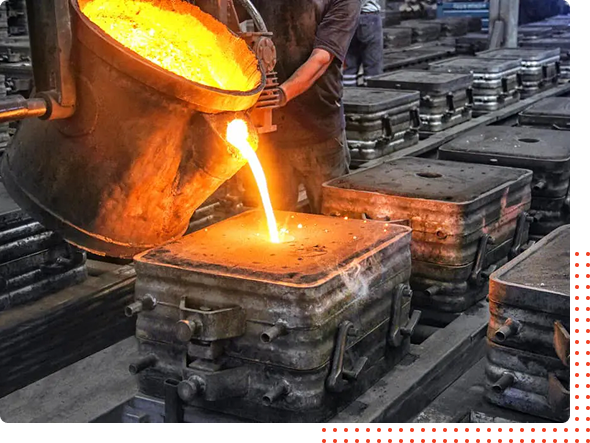
Track Links
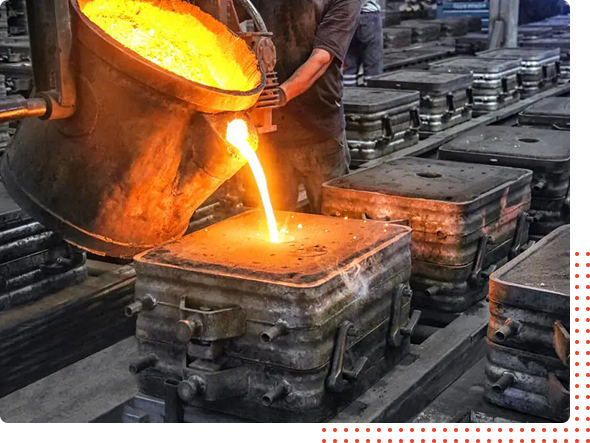
Hydraulic Cylinders
Bucket Teeth
Turbine Discs
Generator Shafts
Transmission Blanks
Pipe Fittings
Landing Gear Cylinders
Engine Mounts
Wing Spars
Bulkheads